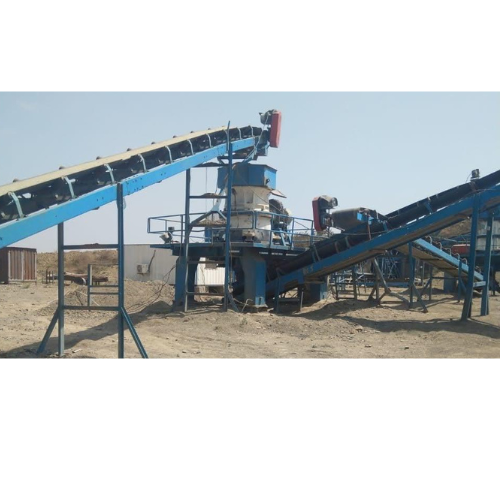
When it comes to fine aggregate shaping and Manufactured Sand (M-Sand) production, choosing the appropriate secondary or tertiary crusher makes or breaks your plant's profitability. While both Vertical Shaft Impactors (VSI) and Horizontal Shaft Impactors (HSI) utilize impact force to crush stone, their design, wear patterns, and aggregate output parameters are fundamentally different. This comparison guide helps you choose the perfect machine based on raw stone abrasiveness and market sizing demand.
1. Impact Crushing Mechanics Explained
The two machines utilize impact force but apply it through different mechanical layouts:
- HSI Crusher (Horizontal Shaft): Stone is introduced into a large chamber where heavy hammers mounted on a horizontal rotor strike it directly, throwing it against steel blow bars. It is highly effective for soft-to-medium rocks (limestone, coal) and delivers high reduction ratios.
- VSI Crusher (Vertical Shaft): Raw grit is fed into a vertical rotor spinning at extreme speeds (up to 75 m/s) and is flung outward against a dense bed of stones in the crushing chamber (rock-on-rock impact). VSI-crushed stone has an exceptionally consistent cubical shape, making it the industry standard for M-Sand production.
2. VSI vs. HSI Technical Parameter Comparison
This table compares SREW's high-efficiency VSI and HSI impact crushers based on key B2B operational parameters.
| Parameter | SREW VSI Crusher (Rock-on-Rock) | SREW HSI Crusher (Direct Blow Bars) |
|---|---|---|
| Primary Application | NHAI sand production, aggregate cubical shaping | Secondary crushing of soft-to-medium aggregates |
| Crushing Cavity Tech | Rock-on-rock or Rock-on-anvil | Blow bars and heavy rotor hammers |
| Max Feed Sizing | Grits under 45mm | Raw boulders up to 350mm |
| Rock Abrasiveness Limit | Extremely high (handles highly abrasive granite/basalt) | Low (restricted to non-abrasive limestone/coal) |
| Silt & Micro-fines Output | Controlled, low waste fines | Higher percentage of fines/waste dust |
| Wear-parts Cost per Ton | Extremely low (due to rock-on-rock design) | High if used for abrasive rock types |
Need Premium Crushing Machinery?
Explore SREW's ISO 9001:2015 certified crushing plants built to deliver high durability and low maintenance costs.
View Full Products Catalog